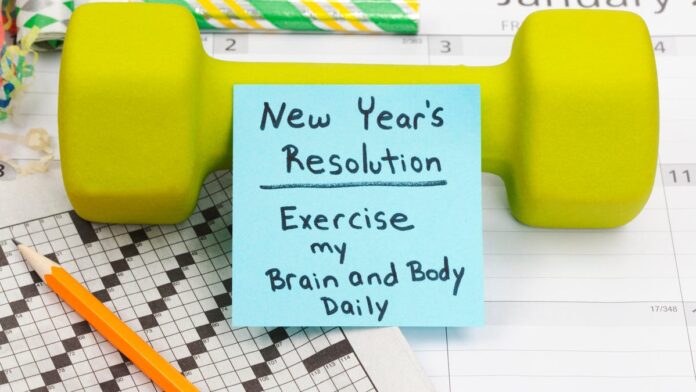
The new year is here, and that means it’s time think about the goals we want to achieve during 2026. Heck, maybe you’ll even make a vision board. But if you create goals that are too lofty, you may be setting yourself up for defeat — it’s important to be realistic when making plans. If you’ve never even completed a 5K race, you probably won’t be prepared to run a marathon in the next three months. Then, if you fail to meet your fitness goals, you may feel disheartened or unmotivated to continue with your goals.
Setting realistic goals is a good way to start new habits and build a stronger body and more self-confidence. But what does that actually look like in practice? We consulted some fitness experts to get their advice to help you identify some practical fitness goals for the new year.
How much should you exercise a day?
If you can get in a workout every day, it may be easier to stay in the habit. But sometimes life gets busy and it’s hard to maintain daily exercise. Luckily, that doesn’t mean you can’t get in the recommended amount of physical activity. The CDC says the average adult needs 150 minutes of physical activity and two days of muscle-strengthening activity each week, but this doesn’t have to translate to daily exercise.
The new year is the perfect time to set goals, but they need to be realistic and achievable.
One way to get the recommended amount of exercise is walking five days a week for 30 minutes. You could also get more intense exercise for a total of 1 hour and 15 minutes each week. This could translate to a single workout class or long run. Or, you could combine moderate and vigorous exercise at least twice a week.
You may also find that counting steps is the most realistic way to get exercise each day. Harvard Medical School says that walking at least 7,500 steps per day may prolong your lifespan. Consider getting a smartwatch or step counter so you can track your goals and reward yourself when you meet your steps.
What is a realistic fitness New Year’s resolution?
Whether you want to increase flexibility, lose a few pounds or strengthen your core, there are realistic fitness goals that can get you there. Certified personal trainer Jenny Liebl says “as you start to think about health and fitness goals for the new year, it’s important to keep those goals SMART: Specific, Measurable, Attainable, Realistic, and Time-bound.”
Liebl breaks down each part of a SMART goal like this: “Specific means identifying exactly what it is that you want to accomplish. For example, ‘I want to lose some weight next year is incredibly vague, but ‘I want to lose 15 pounds’ is more specific. Measurable means you can literally track or measure your goal. Attainable means determining if your goal is something that you can attain or achieve.”
With regard to attainability, Liebl points out that a 15-pound weight loss may be attainable for someone with 35 percent body fat, but there might not be a healthy way for someone with 16 percent body fat to get there. The trainer goes on to explain “Realistic goals are attainable, more importantly, can help you achieve other longer-term goals.”
For example, imagine you are working to reduce your blood pressure at 5 foot 7 and 184 pounds with 35 percent body fat. Liebl says that in this case, “15 pounds is not only attainable, but it will likely have a positive impact on your chronically high blood pressure as well!” Finally, a time-bound goal is something you can put a reasonable deadline on.
With the SMART framework in mind, here are some expert-recommended realistic fitness goals.
There’s an art to choosing the right goals for 2026.
Focusing on specific skills
Lesley Logan, a certified pilates instructor and founder of onlinepilatesclasses.com, says that narrowing down your goals to smaller skills may help you create more pragmatic goals. For example, instead of trying to hit a huge target like competing in an Iron Man, Logan advises people to “Focus on specific skills or milestones. For example, ‘I aim to achieve unassisted pull-ups. This goal is rooted in my desire to build strength as I age.'”
Think about something you currently struggle with. Is it making it up a long flight of stairs without losing your breath? Integrate hills into your walking routine and try some breathing exercises to increase lung capacity. A realistic goal could be walking up three flights of stairs without stopping or huffing and puffing within a certain time frame.
Stretching 10 minutes a day
Feeling stiff when you try to get moving? You may want to make daily stretching a resolution. Board-certified family physician Dr. Shahinaz Soliman recommends 10 minutes of stretching each day as a realistic fitness goal. She tells us it’s important to “establish a routine where flexibility and mobility are prioritized to avoid undue injuries.”
The doctor says incorporating just a few minutes of stretching into your day-to-day activities may help prevent stiff muscles and constricted joints. And while you may want to stretch before a workout, that’s not the only time stretching may be beneficial. Dr. Soliman says 10 minutes of stretching can “be completed before or after exercising or at any point throughout the day.” A SMART goal could be stretching your calves each day until you can touch your toes.
Learning a new 15-minute workout
If your days are busy or your budget is tight, signing up for a new fitness class or sports league may doom you to giving up. Instead, Logan says we should remember that “sustainable goals are often built on small habits. If daily Pilates seems daunting, aim to do a quick 15-minute session a few times a week.” She says people should recognize that every small achievement counts and aim for gradual progress. According to Logan, “As you become comfortable with your smaller goals, gradually increase their intensity or frequency. This approach helps to build confidence and makes it easier to push yourself further over time.”
Walking 30 minutes a day
Meeting the CDC recommendations for movement can be achieved with a daily morning or evening walk. As Dr. Soliman points out “This is an excellent goal to accomplish if one wants to remain physically active without over-committing themselves.”
While it may not seem like this simple goal will make a big difference, the doctor says that you may be able to achieve “increased cardiovascular health, uplifted mood, and boosted energy levels.” As for a SMART goal, you could start with two days a week and set a timeline for walking five days a week. Increase your walking time and difficulty as you’re able to.
Devoting time to strength training
Strength training addresses your entire body, including glutes, shoulders and upper back. It’s a good complement to activities like walking or running, which improve lung capacity and cardiovascular health, but leave out major muscle groups. Dr. Soliman says “Weight training is very important for increasing muscle mass, bone density levels and the rate of metabolism.”
Unlike walking, you don’t need to aim to train this way daily. Instead, the doctor recommends “twice a week for about twenty to thirty minutes each session.” And you don’t even need equipment. Dr. Soliman says “You could use bodyweight movements like squats or push-ups, or use resistance bands.”
It’s vital to devote your time to the right things in 2026.
How to keep your New Year’s resolution
When it comes to sticking to a New Year’s resolution, the key may be working toward a proactive goal instead of focusing on depriving yourself. A 2020 study published in PLoS One tested approach-oriented goals against avoidant-oriented goals. Approach-oriented goals are those in which you’re aiming for a positive outcome, like increasing muscle strength. Avoidant-oriented goals are ones in which you stop doing something, like drinking soda.
While both types of goals have the potential to improve your health, the study found that 59% of people who had an approach-oriented goal were successful, vs. just 47% of people with an avoidant-oriented goal.
If you need more motivation, Logan recommends focusing on why you set your goal in the first palace. She says “Before setting goals, ask yourself what you truly want and why. For instance, if you’re considering running, reflect on your motivation. Is it to keep up with your children, enjoy outdoor adventures, or boost your endurance? Understanding your underlying motivation helps you stay focused and committed.”
The bottom line
When it comes down to it, a realistic fitness goal is one that is specific, attainable and measurable. Don’t tell yourself you’re going to climb a mountain. Instead, try walking up more hills. According to our experts, realistic fitness goals can be as simple as walking and stretching every day. If you’re ready to increase your physical activity, move on to strength training, 15-minute online classes, and improving specific skills. No matter what, stay focused on a positive outcome and reward yourself for every step along the way!